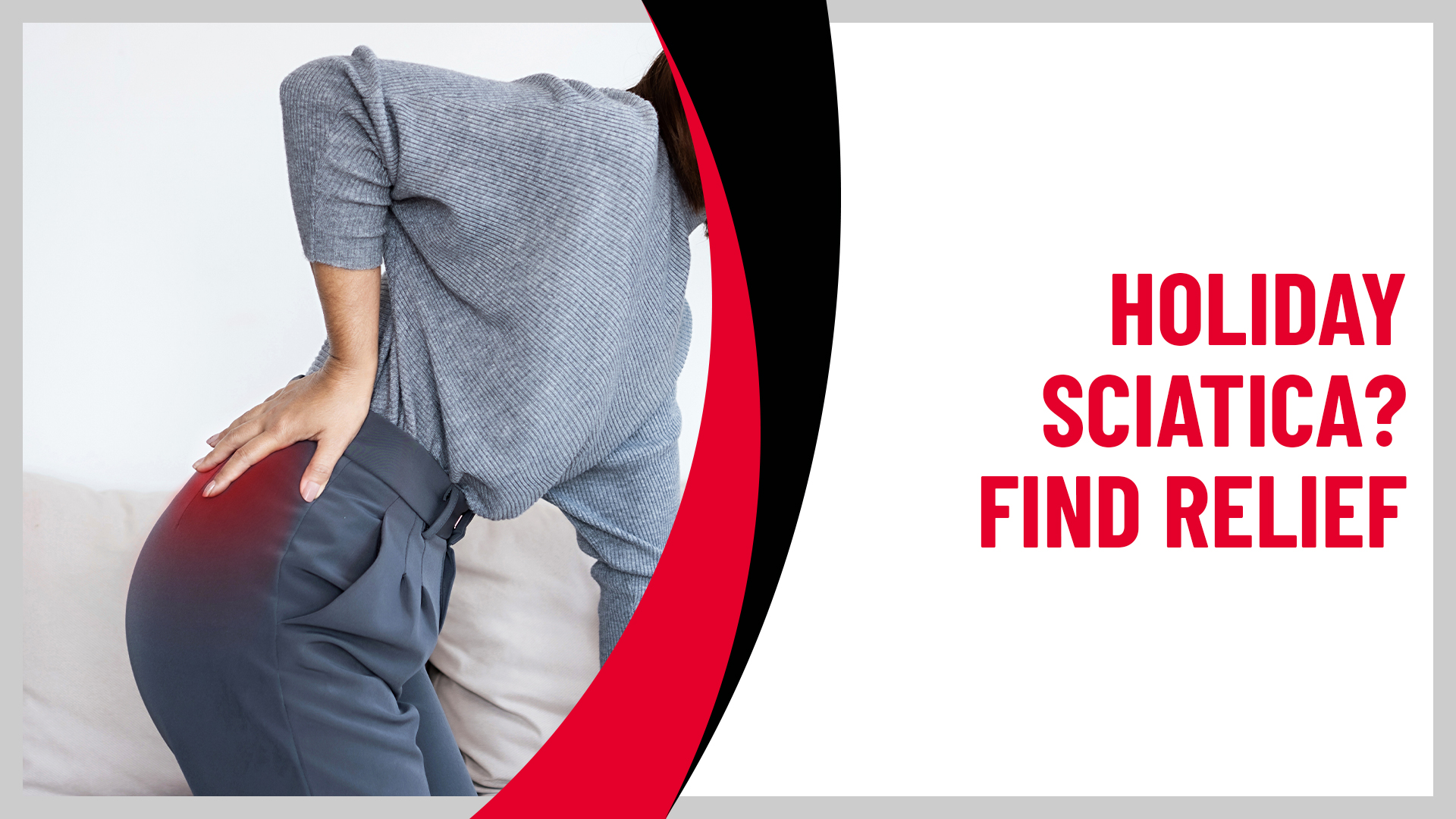
Holiday travel, extra time on your feet, and long hours sitting during meals or gatherings can make sciatic nerve pain flare up. Sciatica, also known as radiating leg pain or lumbar radiculopathy, can feel sharp, burning, or achy, and it often gets worse when routines change this time of year. This guide explains why sciatica acts up during the holidays and gives simple ways to stay more comfortable. You will also learn how physical therapy can help reduce symptoms and support long-term relief.
Reviewed and contributions made by VP of Clinical Development Thomas Denninger
Key Takeaways
- Sciatica often worsens during holiday travel, long sitting, standing, or heavy lifting.
- Gentle stretches and strategic movement breaks can ease pressure on the sciatic nerve.
- Small posture changes go a long way in calming lower back and leg pain.
- Physical therapy supports strength, mobility, and nerve health for lasting relief.
- In most cases, no doctor’s referral is needed to begin care with ATI Physical Therapy
Why Sciatica Flares Up During the Holidays
Sciatica often increases when routines shift during the holiday season. Long car rides and crowded flights place extra pressure on the lower back and hips, which can irritate the sciatic nerve. Heavier-than-usual lifting, such as handling luggage, carrying gifts, or moving decorations, can strain the muscles that support your spine. Standing for long periods while cooking or hosting can also fatigue the back and glute muscles that help stabilize the pelvis. Cold weather may tighten these muscles even more, making nerve pain feel sharper or more persistent.
The American Physical Therapy Association (APTA) notes that prolonged sitting increases lower back and disc pressure, which can heighten sciatic irritation. They emphasize maintaining movement throughout the day to keep the spine and surrounding muscles healthier and more resilient (ChoosePT).
If sciatica is slowing you down, come to ATI Physical Therapy for an initial evaluation. A licensed physical therapist will design a personalized plan around your needs. In most cases, no doctor’s referral is needed to get started.
By the Numbers: Sciatica and Seasonal Pain
Seasonal shifts can contribute to more frequent nerve-related discomfort. Research from the National Institutes of Health (NIH) (Cold Exposure and Musculoskeletal Conditions) shows that shifts in temperature, decreased activity, and increased physical demands around the holidays lead to higher reports of musculoskeletal and nerve-related pain. Winter months also bring a noticeable rise in prolonged sitting time due to travel, shorter daylight hours, and indoor gatherings, all of which can increase lower back pressure.
The CDC notes (Physical Activity and Cold Weather Safety) that colder weather reduces physical activity levels for many people, which can weaken supportive muscles over time. When those muscles become stiff or fatigued, the sciatic nerve is more likely to become irritated. These combined factors make the holiday season a common time for sciatic flare ups. Research also shows that back pain affects about 80 percent of adults at some point in their lives (NCCIH), which means many people are already vulnerable when winter routines shift.
Common Holiday Sciatica Triggers
Holiday activities place different demands on your back and legs. Being aware of these triggers makes it easier to avoid flare-ups.
Long car rides or flights
Extended sitting increases pressure on the lower back and sciatic nerve.
Lifting heavy luggage or packages
Bending or twisting while lifting strains the lower back.
Standing for hours while cooking or hosting
Static standing tightens the hip and back muscles.
Cold weather stiffness
Lower temperatures decrease blood flow and make muscles more prone to spasm.
Simple Prevention Tips that Work
Small adjustments can make holiday activities much more comfortable. A few mindful changes go a long way.
- Break up long sitting
Stand, stretch, or walk every 30 to 45 minutes during travel or long meals. - Use good posture when sitting
Keep your feet flat, hips supported, and avoid slouching. Add a small pillow behind your lower back. - Lift smart
Bend your knees, keep items close, and avoid twisting your back while lifting gifts, bags, or groceries. - Warm up cold muscles
Take a short walk or stretch before driving, lifting, or standing for extended periods. - Alternate sitting and standing while cooking or hosting
Use a stool or high chair for prep tasks to reduce strain.
As the APTA emphasizes, regular movement helps reduce nerve sensitivity and supports overall back health (source: https://www.apta.org/patient-care).
At Home Stretch Routine for Sciatic Pain Relief
Gentle stretches can reduce tension in the lower back, hips, and glutes. These movements help calm sciatic irritation and improve mobility. Stop if pain increases.
- Seated figure four stretch
Sit tall, cross one ankle over the opposite knee, and gently lean forward. Hold for 15 to 20 seconds. - Kneeling hip flexor stretch
Kneel on one knee, shift weight forward slightly, and feel a stretch in the front of the hip. Hold 20 seconds on each side. - Standing hamstring stretch
Place one foot on a step, hinge forward at the hips, and keep your back straight. Hold 15 seconds. - Lower trunk rotations
Lie on your back with knees bent and gently rock your knees side to side. Repeat 10 times.
ATI Physical Therapy can demonstrate these stretches and customize them to your needs during an evaluation.
How Physical Therapy Helps During the Holidays
Sciatic nerve pain often stems from stiffness, weakness, or restricted mobility. A licensed physical therapist can identify the root cause, whether it is related to posture, hip mechanics, or lower back movement.
Physical therapy can help by:
- Reducing nerve tension with targeted stretching.
- Strengthening the core and hip muscles for better support.
- Improving posture and lifting form for daily activities.
- Teaching you a personalized home routine to prevent flare-ups.
Physical therapy is evidence-based and focuses on sustainable habits to prevent pain from returning.
Quick Self Check
Use this list to see if it is time to schedule an evaluation:
- Pain travels from your lower back into your leg.
- Sitting or standing makes symptoms worse.
- You feel numbness or tingling in your leg or foot.
- Pain has lasted more than a week without improvement.
If you answered “yes” to two or more, a physical therapist can help.
If sciatica is slowing you down this season, come to ATI Physical Therapy for an initial evaluation. A licensed physical therapist will design a personalized plan around your needs. In most cases, no doctor’s referral is needed to get started.
Ready to take the next step?
Book an Evaluation Today
Frequently Asked Questions
What is the fastest way to get sciatica relief during the holidays?
Take frequent movement breaks, stretch gently, and support your lower back while sitting.
Does cold weather make sciatica worse?
Yes. Cold temperatures can tighten muscles and increase nerve sensitivity, which can worsen symptoms.
Is it safe to travel with sciatica?
Yes. Movement breaks, supportive seating, and gentle stretching will help prevent and ease discomfort while traveling.
Should I rest or stay active?
Light activity is better than prolonged rest. Gentle walking and stretching reduce irritation.
Can physical therapy help long-term sciatic pain?
Absolutely. Physical therapy improves mobility, strength, and posture, reducing the likelihood of flare-ups.