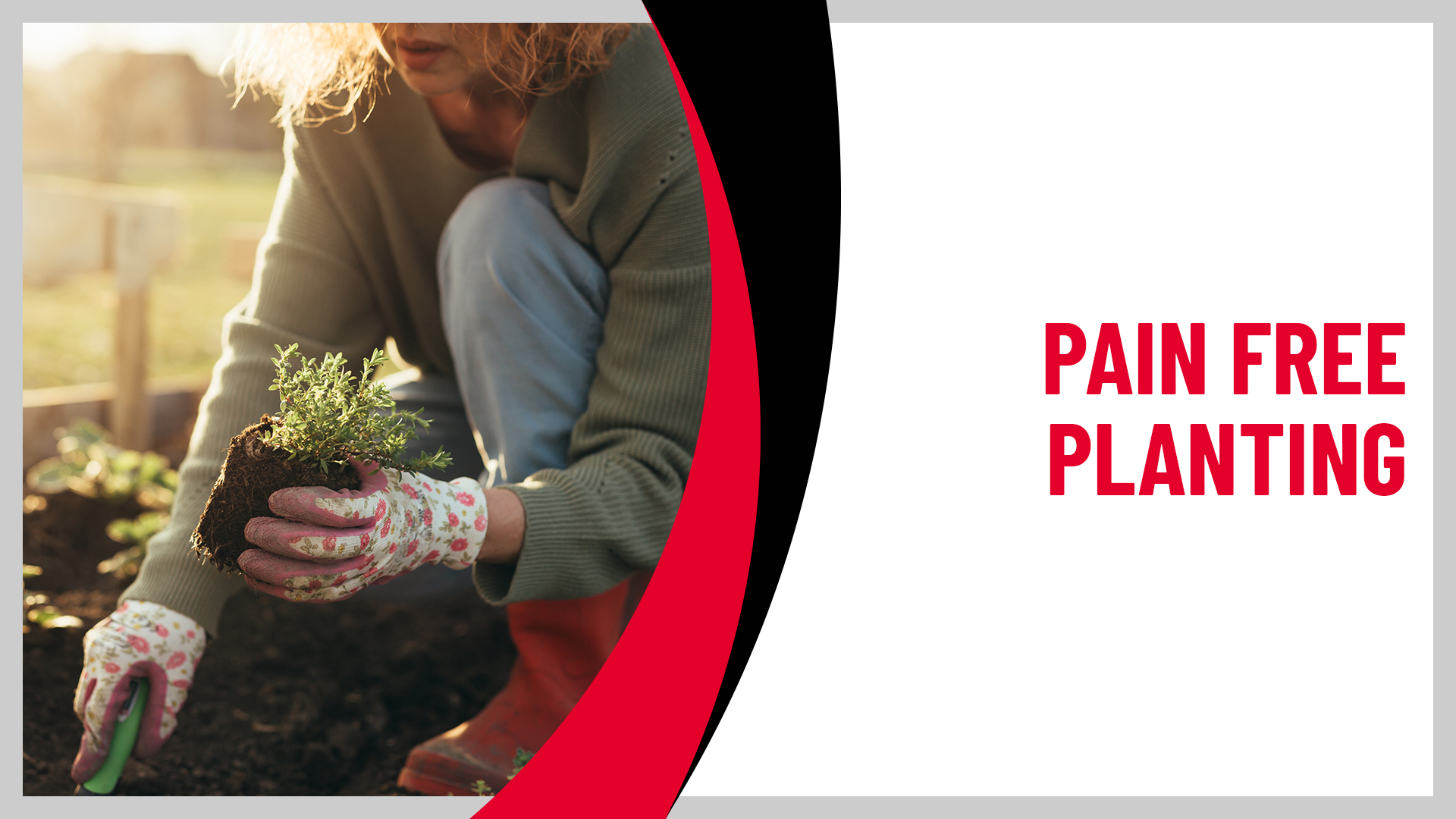
You head outside for a quick hour in the garden, and the next morning your back is tight, your knees ache, and your shoulders are sore. Gardening is a great way to stay active, but it can also lead to back, knee, and shoulder pain if your body is not prepared. Repetitive bending, kneeling, lifting, and reaching can strain the body, especially when tissues aren’t conditioned for those loads and positions. This guide explains why gardening pain happens, how to prevent it, and simple ways to stay comfortable while enjoying your time outdoors.
Reviewed and contributions made by VP of Clinical Development Thomas Denninger
Key Takeaways
- Gardening often involves repetitive movements that can strain the back, knees, and shoulders.
- Repetitive or sustained bending over shifts the load away from the hips and onto the lower back and hamstrings.
- Small changes in technique and setup can reduce stress on your body.
- Taking breaks and preparing your body can help prevent injury.
- In most cases, no doctor’s referral is needed to begin care at ATI Physical Therapy.
Why Gardening Can Cause Pain
Gardening requires a combination of movements that many people do not perform regularly during the winter months. Activities like digging, planting, weeding, and lifting bags of soil can quickly add up and place stress on your body.
Bending forward for long periods can strain the lower back, while kneeling or squatting may irritate the knees. Reaching overhead or using tools repeatedly can also lead to shoulder fatigue. When muscles are not conditioned for these movements, even simple tasks can become uncomfortable
Over time, these repeated stresses can change how your body moves, leading to stiffness, soreness, or pain during and after gardening.
Common Gardening Pain Areas
Gardening often involves repeated movements that target the same joints and muscle groups. Without enough variation or support, these areas can become sore or fatigued, especially during longer sessions. Recognizing where pain tends to develop can help you adjust your approach early and reduce strain before it becomes something more limiting.
Lower Back Pain
Repeated bending at your low back rather than your hips is one of the most common reasons people feel sore after gardening.
Knee Pain
Kneeling, squatting, and transitioning between positions can irritate the knees, particularly when working on hard or uneven surfaces.
Shoulder Pain
Reaching, lifting, and repetitive arm movements can lead to shoulder strain, especially when working overhead or using tools for extended periods.
If you or a loved one is experiencing pain during gardening or other activities, come to ATI Physical Therapy for an initial evaluation with a licensed physical therapist. We will build a personalized plan around your needs. In most cases, no doctor’s referral is needed to begin care.
How to Garden Without Pain
Reducing gardening pain is not about avoiding activity but about making small adjustments to how you move and how your environment is set up. Paying attention to posture, pacing, and body positioning can help reduce unnecessary stress and allow you to stay active longer without discomfort.
Use Proper Lifting Technique
Think ‘hips back, chest tall’ when lifting a bag of soil or pot. If your back is rounding, you are putting the strain in the wrong place.. Keep objects close to your body and avoid twisting.
Change Positions Frequently
Avoid staying in one position for too long. Alternate between standing, kneeling, and sitting to reduce strain on joints and muscles.
Use Supportive Tools
Kneeling pads, raised garden beds, and long-handled tools can help reduce bending and pressure on your body.
Pace Yourself
Break tasks into smaller sessions and take short breaks to avoid fatigue and maintain good movement patterns.
Simple Warm-Up Before Gardening
Preparing your body before gardening can help reduce stiffness and improve how your muscles and joints respond to activity. A short warm-up can increase circulation, improve flexibility, and make movements feel more natural once you get started.
Move slowly and stop if pain increases.
Arm Circles
- Prepare your arms to be reaching and lifting:
- Extend your arms to your sides
- Perform 10 circles forward
- Perform 10 circles backward
Standing Hip Hinge
- Get started in the right pattern and warm up joints and tissues
- Stand with feet shoulder-width apart
- Bend slightly at the hips while keeping your back straight
- Return to standing
- Perform 10 repetitions
Knee Bends
- Prepare for kneeling and squatting:
- Stand with feet shoulder-width apart
- Slowly bend your knees into a partial squat
- Return to standing
- Perform 10 repetitions
When to See a Physical Therapist
If gardening is starting to leave you sore instead of relaxed, it’s worth a conversation with a physical therapist. Early support can help prevent minor issues from becoming more persistent problems.
A physical therapist can assess your movement, strength, and flexibility, then create a personalized plan to help reduce pain and improve how your body handles activity.
Ready to take the next step?
Book an Evaluation Today
Frequently Asked Questions
Why does my back hurt after gardening?
Back pain is often caused by prolonged bending or improper lifting technique.
Is kneeling bad for my knees?
Kneeling can irritate the knees, especially on hard surfaces. Using padding can help reduce pressure.
How can I prevent shoulder pain while gardening?
Avoid repetitive overhead movements and take breaks to reduce strain.
Can physical therapy help with gardening pain?
Yes. Physical therapy can improve strength, mobility, and movement patterns to reduce pain.