
It’s easy to lose track of how much exercise you’re getting during pickleball. You’re concentrating on the next shot, talking with your partner, and deciding whether there’s time for another game. An afternoon that started with a little practice can turn into much more activity than you planned.
That’s one reason pickleball can be such an enjoyable way to stay active. It gets you moving and gives you time with other people. The smaller court can also make the game seem less demanding than it is. Your legs still have to stop and change direction quickly, and your shoulders, elbows, and wrists handle plenty of repeated swings.
Taking care of those demands starts before your first serve and continues between playing days. A moving warm-up, sensible playing time, and regular strength and balance work can help you stay prepared for the game.
Reviewed and contributions made by VP of Clinical Development Thomas Denninger
Key Takeaways
- Pickleball gives you a way to exercise, practice coordination, and spend time with other people.
- Injury prevention includes regular strengthening, balance training, appropriate equipment, and gradually building your tolerance for play.
- A moving warm-up should leave you comfortably warmer and ready to play, without tiring you out.
- Post-play stretching may feel good and support flexibility, but it hasn’t been shown to reliably prevent injuries or meaningfully reduce next-day soreness.
- Stop playing if pain makes you limp or change your swing. Get help if it keeps returning.
By the Numbers
- You can get your heart working even when you play doubles. In one study, players’ average heart rate was nearly 14% higher during 30 minutes of doubles pickleball than during a self-paced walk of the same length. How hard you work will depend on the pace of your game, but you don’t have to play singles to get aerobic exercise. Source: Science & Sports.
- Your weekly routine should leave room for strength work alongside time on the court. The CDC recommends muscle-strengthening activities on at least 2 days a week, working all major muscle groups. Strengthening your legs, hips, trunk, and upper body helps prepare you for the repeated effort involved in playing. Source: CDC adult activity recommendations.
- Having fun while you exercise is part of pickleball’s appeal. In the same study comparing doubles pickleball with walking, participants’ enjoyment scores were 150% higher during pickleball. Finding exercise you look forward to may make it easier to keep coming back. Source: Science & Sports.
If the same elbow ache returns every time you play, your ankle feels unreliable when you change direction, or you’re unsure about returning after an injury, an ATI physical therapist can help you work through it. We may check how your ankles, shoulders, hips and knees move, test your strength and balance, and watch you step, reach, or slow down. We’ll also ask how often you play and when symptoms appear.
Why Pickleball Can Be a Good Way to Stay Active
Played with paddles and a perforated plastic ball, pickleball combines elements of tennis, badminton, and table tennis. You can play singles or doubles, and beginners can start with easy rallies and lessons before moving into faster games.
Pickleball gets you moving in several directions, often in short bursts. You follow the ball, judge where it will land, and coordinate your feet and paddle to make the shot. A relaxed doubles game gives you a different workout from competitive singles, so choose a pace that lets you enjoy playing without becoming exhausted.
Having people to play with can make it easier to keep exercise on your calendar. You may be more likely to go when a partner is expecting you, and improving your shots gives you something to work toward. Early research points to physical, social, and psychological benefits, although many studies are small.
Pickleball Injury Prevention Starts Between Games
Think about what happens when you chase a short shot. Your calves help you push off, your hips and thighs control the stop, and your arm has to position the paddle while the rest of you is still moving. Preparing for pickleball means training more than the arm that holds the paddle.
Strength work for your legs, hips, trunk, shoulders, and forearms helps prepare those areas to handle repeated effort. Balance training and controlled changes of direction are useful, too, especially if you feel unsteady or have had a fall. If you’re unsure where to begin, a physical therapist can assess your movement and help you choose exercises that fit your abilities.
Give yourself time to get used to playing. After a stretch of inactivity, start with shorter sessions and take breaks between games. Add playing time before you also increase the pace or number of playing days. How you feel that evening and the next morning can help you judge whether the last session was too much.
Court habits matter as well:
- Wear well-fitting tennis or pickleball shoes designed for court traction and sideways movement.
- Check for wet spots, loose balls, and other tripping hazards before playing.
- Take breaks and keep water available, including during indoor play.
- Learn footwork and paddle technique from a qualified instructor. Avoid backpedaling to chase a lob, and let a shot go when reaching it would put you off balance.
- Consider protective eyewear, particularly if you play close to the net.
Before Pickleball: 3 Warm-Up Exercises
Exercise safety note: These exercises are for general education and may not be appropriate for everyone. Talk with a physical therapist or healthcare provider before trying them, especially if you have an injury, medical condition, or recent surgery. Stop if you experience pain, dizziness, or feel unwell.
Spend approximately 5 to 10 minutes warming up before play. Start slowly, then gradually increase the pace while keeping control of each movement. Repeat these three exercises for two or three rounds as tolerated, keeping the pace controlled and allowing enough time to feel warm.
You should feel comfortably warmer, with your breathing slightly increased. A light sweat may happen, but sweating isn’t required. Finish feeling prepared rather than fatigued, then ease into a few gentle rallies before playing at full speed.
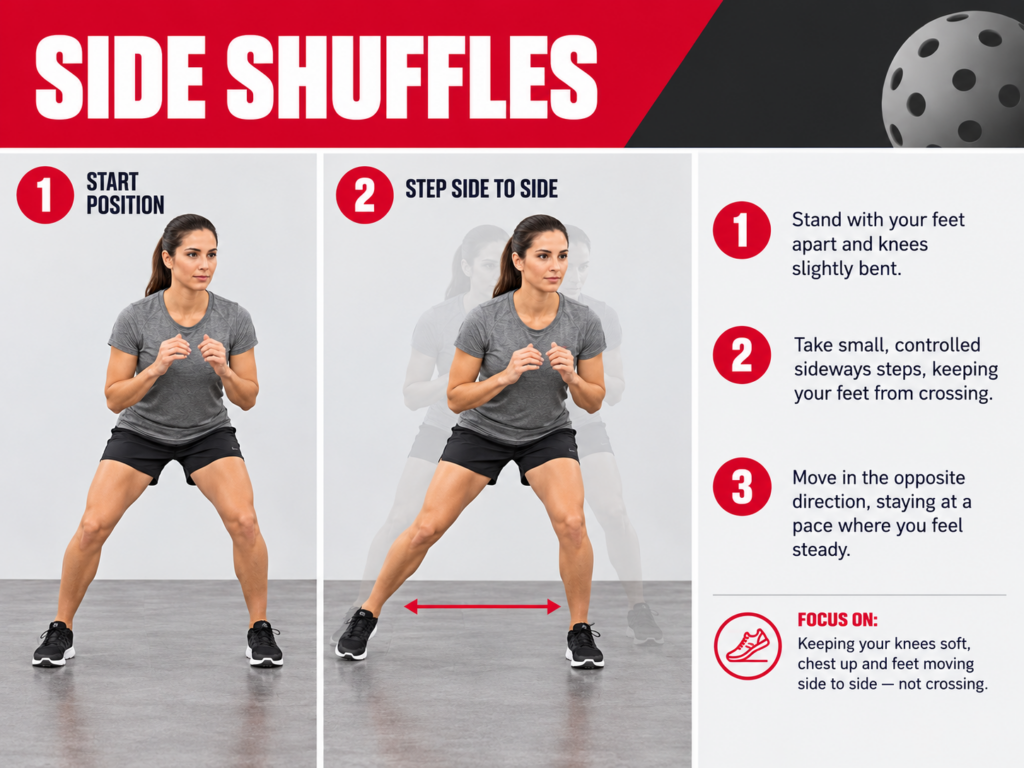
1. Side Shuffles
- Stand with your feet apart and knees slightly bent.
- Take small, controlled sideways steps, keeping your feet from crossing.
- Move in the opposite direction, staying at a pace where you feel steady.
Perform: 20 to 30 seconds in each direction.
Why it helps: Rehearses the lateral movements your hips, knees, and ankles handle on the court.
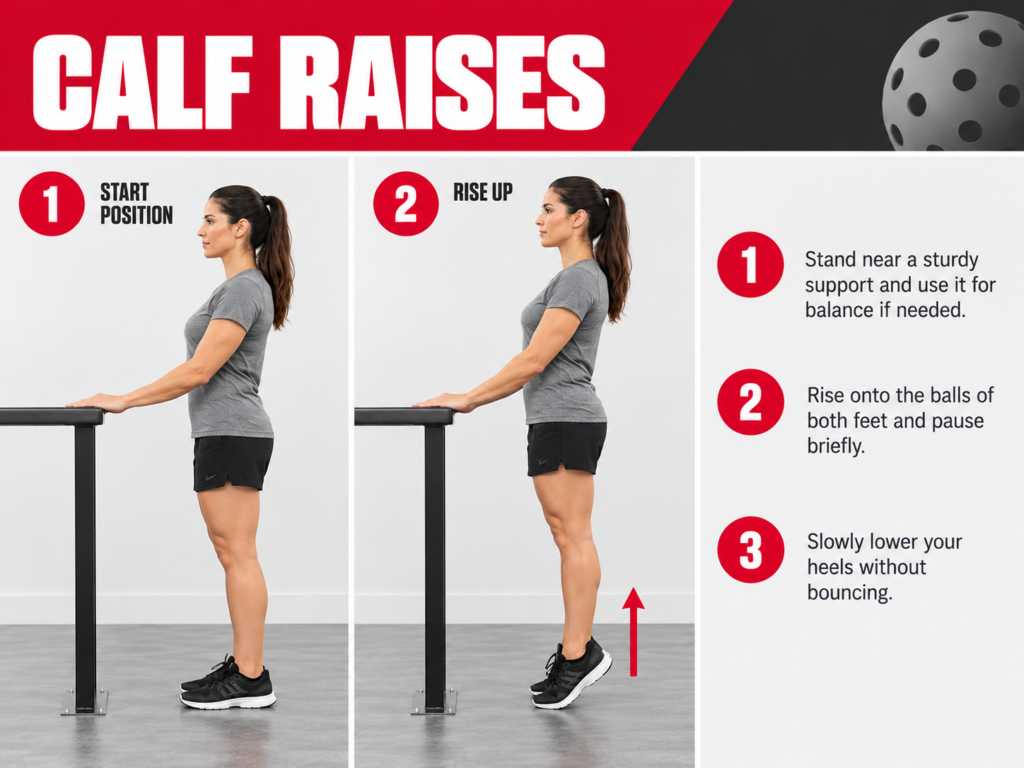
2. Calf Raises
- Stand near a sturdy support and use it for balance if needed.
- Rise onto the balls of both feet and pause briefly.
- Slowly lower your heels without bouncing.
Perform: 10 to 15 repetitions.
Why it helps: Activates the calf muscles used for pushing off, stopping, and changing direction.
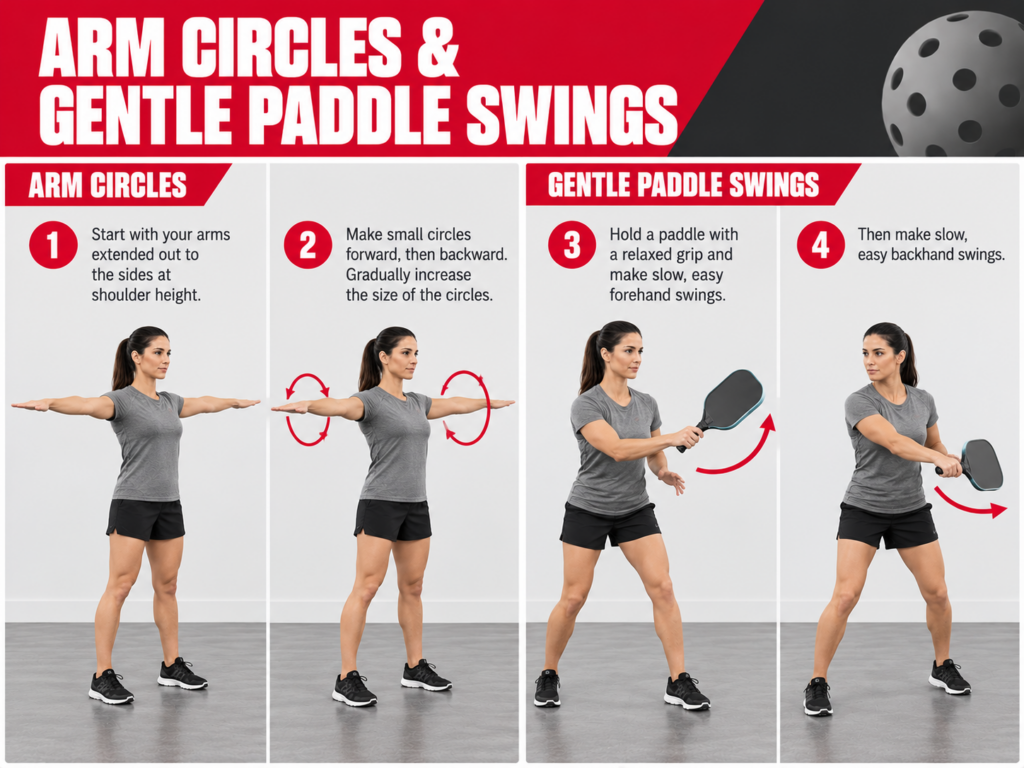
3. Arm Circles and Gentle Paddle Swings
- Make small arm circles, gradually increasing their size within a comfortable range.
- Circle in the opposite direction.
- Follow with slow, easy forehand and backhand practice swings, keeping a comfortable grip.
Perform: 10 circles in each direction, then 10 easy swings total.
Why it helps: Prepares your shoulders, elbows, and wrists for paddle movements without starting at full speed.
After Pickleball: 3 Recovery Stretches
Exercise safety note: These exercises are for general education and may not be appropriate for everyone. Talk with a physical therapist or healthcare provider before trying them, especially if you have an injury, medical condition, or recent surgery. Stop if you experience pain, dizziness, or feel unwell.
Begin with 3 to 5 minutes of easy walking to gradually bring your activity level down. If stretching feels comfortable, use the following movements to work on flexibility and ease into your post-game routine. Hold a mild stretch without bouncing or forcing the position.
These stretches may feel good after playing, and regular stretching can support flexibility, but they won’t make up for playing too long or too hard. Studies haven’t found meaningful reductions in next-day muscle soreness from post-exercise stretching, and stretching alone hasn’t been shown to reliably prevent injuries.
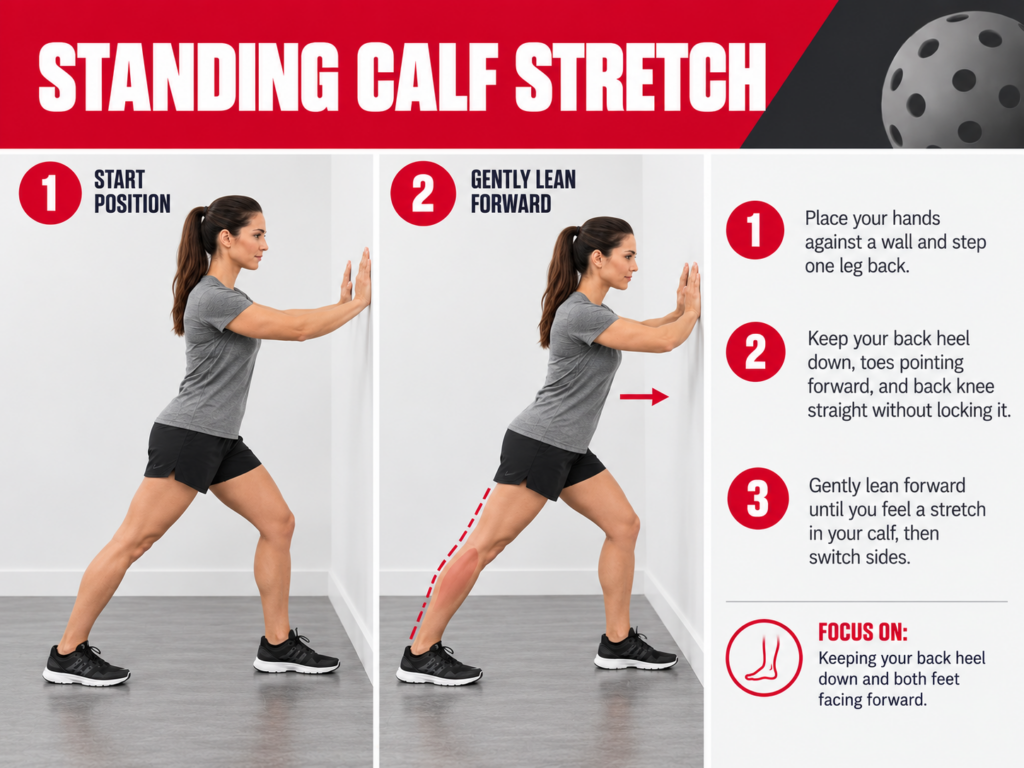
1. Standing Calf Stretch
- Place your hands against a wall and step one leg back.
- Keep your back heel down, toes pointing forward, and back knee straight without locking it.
- Gently lean forward, then switch sides.
Perform: Hold 20 to 30 seconds per side.
Why it helps: Gently stretches the calves after repeated pushing off and stopping.
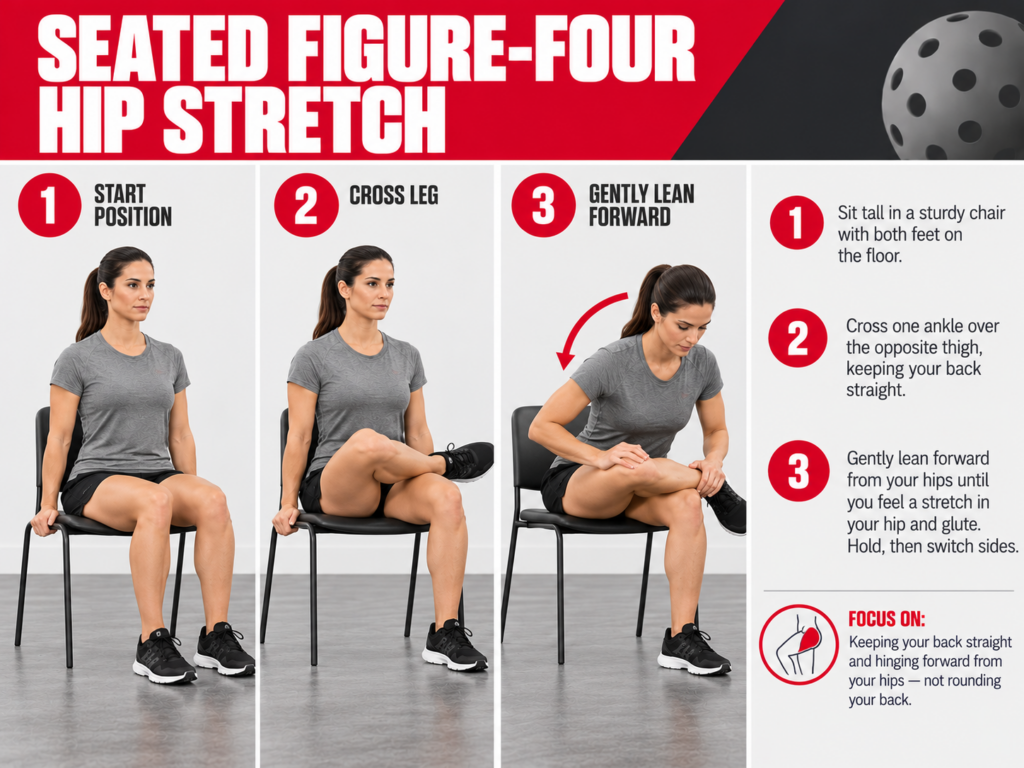
2. Seated Figure-Four Hip Stretch
- Sit upright in a sturdy chair and place one ankle over the opposite thigh.
- Keep your back comfortably straight and hinge forward slightly from your hips.
- Stop at a mild stretch in your hip or buttock, without pressing down on your knee.
Perform: Hold 20 to 30 seconds per side. Skip this position if crossing your leg is uncomfortable, or if you’ve had a hip replacement and your surgeon or physical therapist has advised against it.
Why it helps: Stretches the hip and glute muscles used during side-to-side court movement.
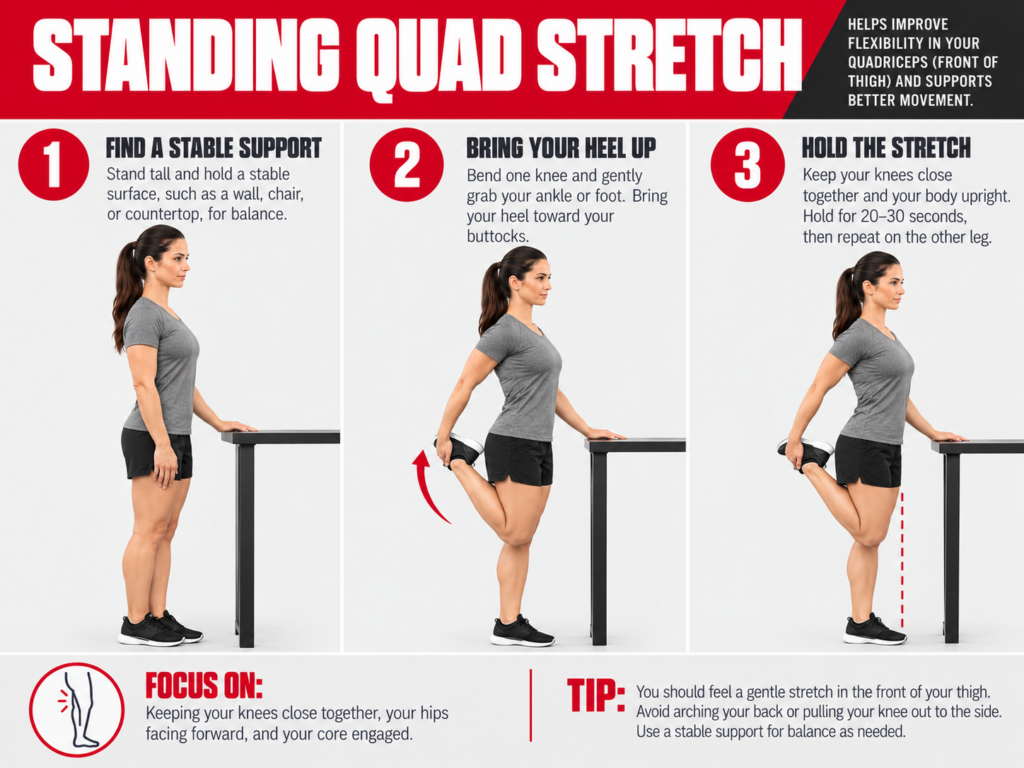
3. Standing Quad Stretch
- Stand beside a stable surface and hold it for balance.
- Bend one knee and gently hold your ankle, bringing your heel toward your buttocks.
- Keep your knees close together and your back relaxed, without pulling hard or arching.
Perform: Hold 20 to 30 seconds per side. Skip this stretch if reaching your ankle feels awkward or causes knee pain.
Why it helps: Gently stretches the front of the thighs after repeated squatting and quick stops.
Recovery Also Means Knowing When to Rest
After playing, drink water, eat as you normally would after exercise, and give yourself enough time to rest and sleep. If you’re still unusually tired or sore when the next playing day arrives, shorten the session or take a day off. You may need more recovery after a long or competitive session than after an easy game.
Common pickleball injuries include ankle sprains, calf strains, Achilles tendon problems, and irritation around the elbow or shoulder. Falls can also cause wrist fractures or other injuries, particularly in older players. Don’t try to stretch through sharp pain, significant swelling, or symptoms that change the way you walk or swing.
Seek prompt medical care for a sudden pop with difficulty pushing off, bearing weight, or using an arm. Severe pain, an obvious deformity, or new numbness after a fall also needs urgent assessment. If you experience chest pain, fainting, or severe shortness of breath during play, stop playing and call 911.
Ready to Feel More Prepared for the Court?
If the same elbow ache returns every time you play, your ankle feels unreliable when you change direction, or you’re unsure about returning after an injury, an ATI physical therapist can help you work through it. We may check how your ankles, shoulders, hips and knees move, test your strength and balance, and watch you step, reach, or slow down. We’ll also ask how often you play and when symptoms appear.
Your plan will depend on what we find. That might mean strengthening a weak area, practicing balance and footwork, or adjusting your playing schedule while you build back up.
Ready to take the next step?
Book an Evaluation Today
Frequently Asked Questions
Is pickleball good exercise for beginners?
It can be. Lessons, easy rallies, and shorter doubles sessions offer ways to begin at a manageable pace. If a medical condition affects your ability to exercise safely, discuss your plans with your healthcare provider.
Should I stretch before or after pickleball?
Before playing, prioritize moving exercises that gradually warm you up. Comfortable held stretches can fit after play, once you’ve walked to cool down, or at another time when your muscles are warm.
Can I play pickleball every day?
Some experienced players tolerate frequent play, but daily sessions aren’t the right starting point for everyone. Build gradually and leave room for strengthening and recovery. Recurring pain or lingering fatigue is a reason to adjust.
Does stretching after pickleball prevent soreness?
Not reliably. Stretching may feel pleasant and support flexibility, but it doesn’t meaningfully prevent delayed muscle soreness. How much you play and how quickly you increase the workload also deserve attention.
Can physical therapy help before I have an injury?
Yes. If weakness, stiffness, or balance difficulties make you hesitant on the court, a physical therapist can assess those concerns and help you prepare. This can be especially useful after a long break from exercise. No exercise program can remove every injury risk.